



Understanding FRP Body Kits: Why Prep Work Delivers Better Fitment
Understanding Professional FRP Body Kits: Why Prep Work Delivers Better Fitment
A workshop guide on the industry standard preparation for high performance front bumpers, side skirts, and aero panels.
Quick Answer: The FRP Workflow Reality
If you are upgrading to a front bumper, rear bumper, or side skirts, it is vital to understand that professional-grade composites are designed for a specific installation process. Unlike high-volume injection-moulded plastics, FRP is engineered as a professional composite material intended for test-fitting, refinement, and preparation during installation.
- Hand-laid FRP: Valued for structural rigidity, sharp lines, and superior thermal stability in Australian conditions.
- Semi-Finished State: Arrives in a raw gel coat designed for dry fitting, trimming, and high-build priming.
- Professional Standard: Achieving a show-quality finish requires standard preparation: the same benchmark used for premium motorsport and custom builds.
At our Coopers Plains workshop, these components are manufactured as professional-grade composite parts designed for final preparation and precision fitment during installation.
1. Why Serious Builds Use Hand-Laid FRP
Professional workshops and custom builders choose hand-laid fibreglass body kits and FRP front bumpers for large-scale components like bumpers and side skirts because they offer benefits that mass-market plastics like ABS or PP often cannot match.
OEM manufacturers typically use injection-moulded plastics because they are ideal for high-volume production and rapid assembly line consistency. FRP body kits in Australia are commonly used for low-volume performance styling where structural rigidity, repairability, and custom shaping are prioritised.
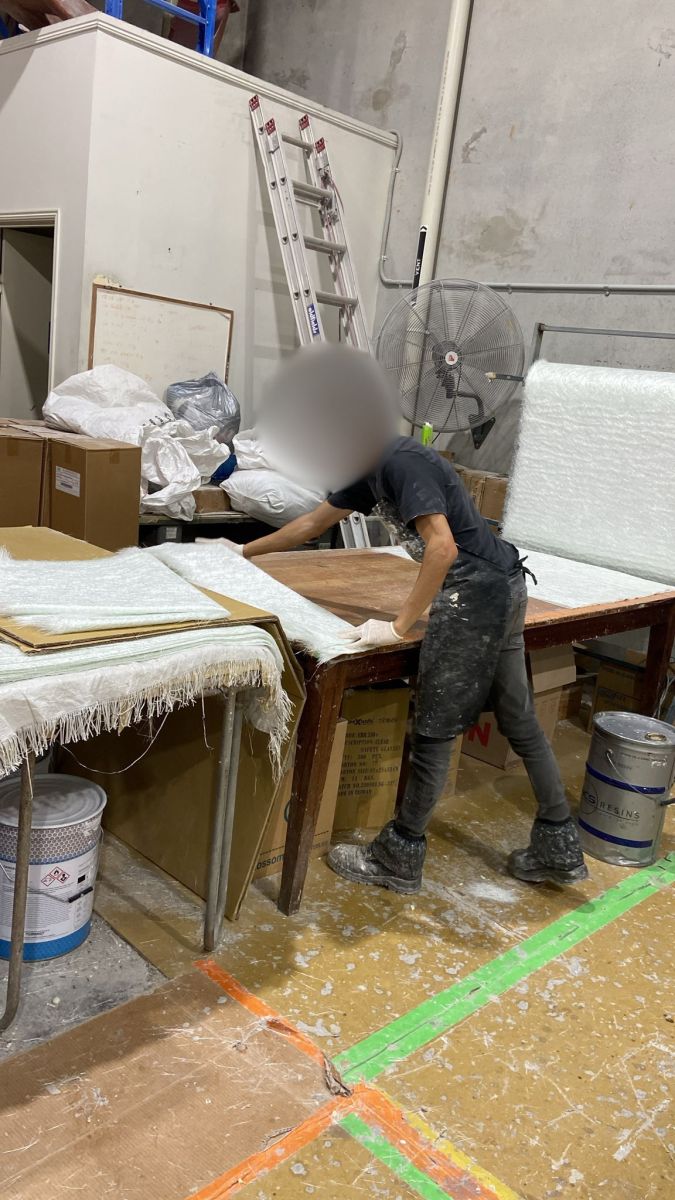
Hand-laid craftsmanship at our Coopers Plains workshop. Every layer is inspected for structural consistency.
- Structural Integrity for Large Panels: Large components must hold their shape at high speeds. FRP provides the necessary rigidity that flexible plastics often lack.
- Thermal Stability (The Sag Factor): Large thermoplastic panels may become more flexible under prolonged heat exposure, while cured FRP maintains a more rigid structural profile. This makes FRP particularly well suited to harsh Australian summer conditions and high engine bay temperatures.
- Repairability: Front bumpers and side skirts are vulnerable to road debris. Unlike many plastics that are difficult to repair once cracked, FRP can usually be professionally restored and reinforced.
2. Understanding the Professional FRP Finishing Process
Hand-laid FRP arrives in a protective surfacing layer called gel coat. This is used during manufacturing and is not intended to be a final painted surface. Minor characteristics like small pinholes or light surface texture are normal parts of the composite process.
Think of it like high-end woodworking: the craftsmanship is already there, but professional block-sanding and high-build priming are what create the final show-quality finish. This preparation stage is standard practice across professional body shops worldwide when working with composite aero components.
3. Why Dry Fitting is an Industry Standard
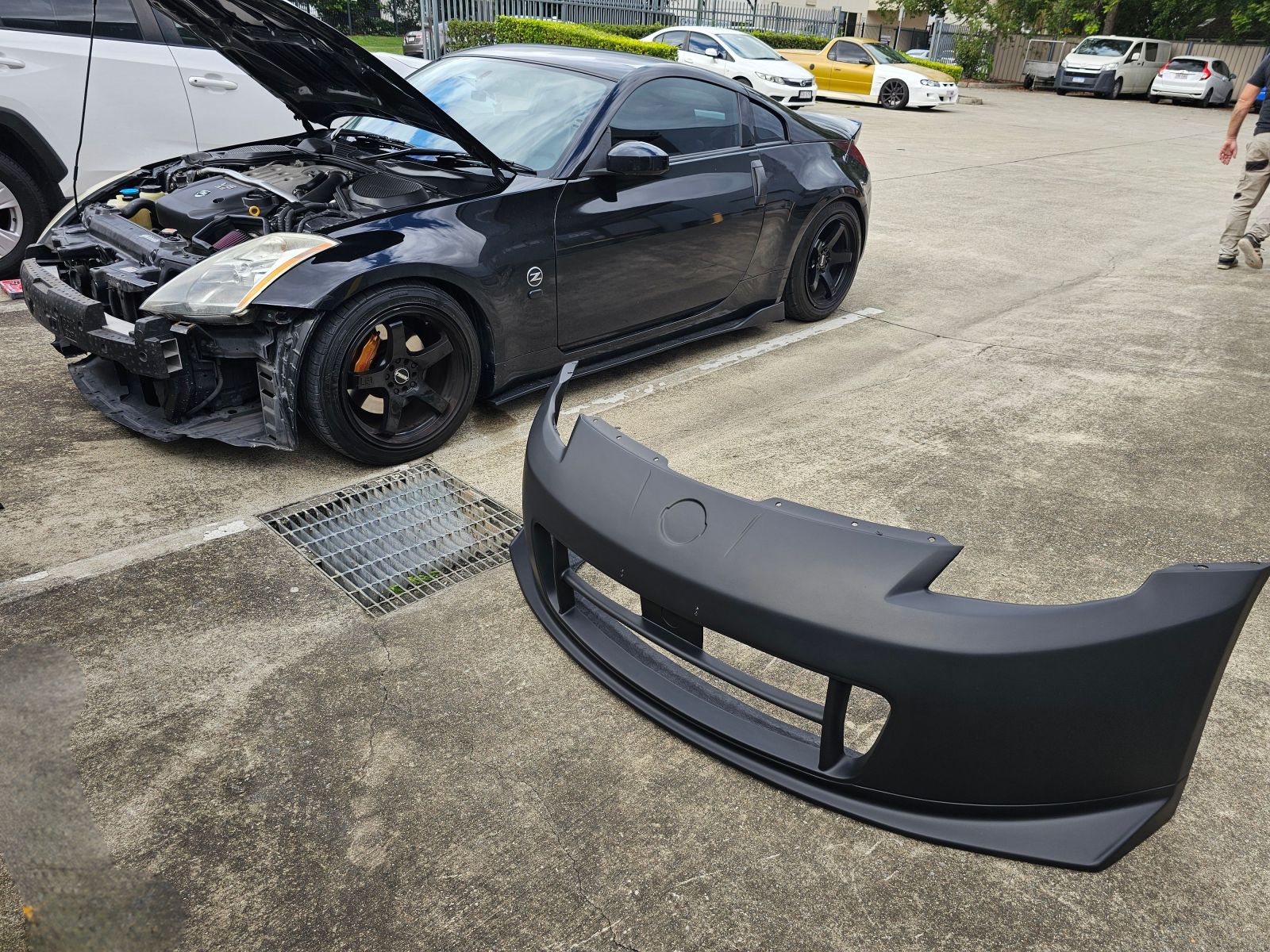
The Professional Workflow: Aligning a front bumper at the workshop to ensure professional body gaps before paint.
Most enthusiast vehicles are now years, or even decades, old. Over time, chassis movement, aged body mounts, and previous repairs influence how new panels line up. This is why a dry fit is always the first step.
- Alignment: Ensuring bumpers and skirts line up with existing factory doors, lights, and quarter panels.
- Trimming: Making minor adjustments to mounting tabs or flanges to achieve tight, uniform body gaps.
- Validation: Confirming fitment in the raw state before any sanding, drilling, or painting begins.
Technical Installation FAQs
Why doesn't FRP fit like an OEM part?
Factory parts are mass-produced for brand-new cars. FRP is a professional composite where trimming and adjustment are standard installation steps.
Is professional installation recommended?
For large panels like front bumpers or wide-body quarters, professional installation is strongly recommended for the best results.
Are pinholes a defect?
No. Small pinholes are normal in hand-laid FRP and are resolved during the standard high-build priming process.
Does test-fitting affect returns?
We encourage dry fitting. However, once a part is sanded, drilled, or painted, it is considered accepted by the installer.
Can FRP be repaired?
Yes. One of its biggest advantages is that it can usually be professionally repaired and reinforced if damaged by road debris.
How does FRP compare to ABS or PP plastics?
Both materials serve different purposes. FRP is commonly preferred for high-end aero applications requiring structural rigidity, repairability, and aggressive styling flexibility, while ABS and PP plastics are often chosen for high-volume OEM-style production.